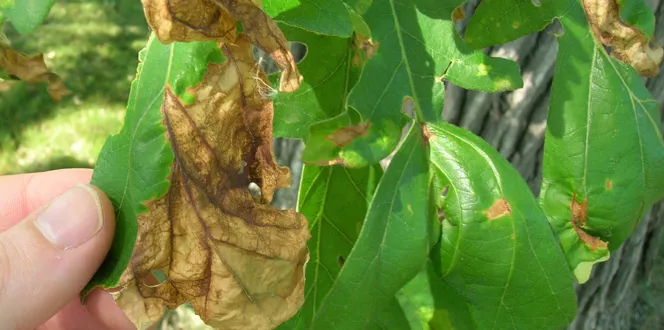

You can usually tell when something is off about your tree. After spending so much time admiring it, things like brown leaves or moldy growth stick out like a sore thumb.
It’s a little harder to tell just how much trouble your tree could be in, though. That’s why Bryan, a Davey blog reader from British Columbia reached out. He was “concerned that some of our trees might be dying or in danger of falling on our house or other buildings,” and wanted to know some dying tree symptoms.
A dead or dying tree is nothing to play guessing games with. Take these simple steps to check on your tree and find out just what it needs.
Symptoms Of A Dying Tree
It’s important to know the difference between a dead and a declining tree. It may be possible to save trees that look sick, but a dead tree can be a risk to you and your home.
A few telling symptoms of a dead tree include:
- Cracks in the trunk or peeling bark
- Mushrooms growing near the tree’s roots or base of trunk
- Multiple branches that have no living buds
Below, read about other dead tree symptoms, and find a step-by-step guide to diagnosing your tree.
How To Identify A Dead Tree
Dead trees often have a combination of visible signs. For example, it’s not just that branches aren’t leafing out, but maybe there are also problems with the trunk or unfamiliar growth near the roots.
If you suspect there’s something wrong with your tree, give it a top-to-bottom inspection, and keep an eye out for a mix of concerning symptoms.
How To Tell If A Tree Is Dying
You can help reduce the risks that come with having a dead tree in your yard in just under a minute!
Try this quick test: Using your fingertip or a pocket knife, scratch one of the tree’s twigs. If it’s moist and green underneath, that portion of the tree is alive.
If it’s brown and brittle, use this step-by-step process to inspect the tree:
- Scratch a couple more twigs to see if any are fresh green underneath.
- See if there are mushrooms or other fungi growing at the tree’s base.
- Check the trunk for peeling bark, cracks or splits.
- Look up into the canopy for dead branches or missing leaves.
- Taken together, these signs point to a dead tree. If your tree failed the scratch test and you see one or more of these signs, call your arborist as soon as possible to confirm and remove it if necessary.
How To Save A Dying Tree
If your tree passed the scratch test, that’s great! Now the next step is to find out if and how you can save your sick tree. The most reliable way to do this is to have a certified arborist inspect the tree in person and provide a diagnosis and treatment plan.
If you want to learn a bit more about what’s going on before calling, check out these common symptoms of tree stress.
Tree Care Tips For Fall
Giving your tree care that is suitable for the season is a great way to help it recover from decline. Read here for some of the most common fall-related tree care questions and answers.
Is your tree in trouble? Does it need to be removed? Call your arborist for a free consultation.


Related Blog Posts

Don’t Skip a Winter Tree Inspection: Why Cold Weather Reveals Hidden Tree Risks